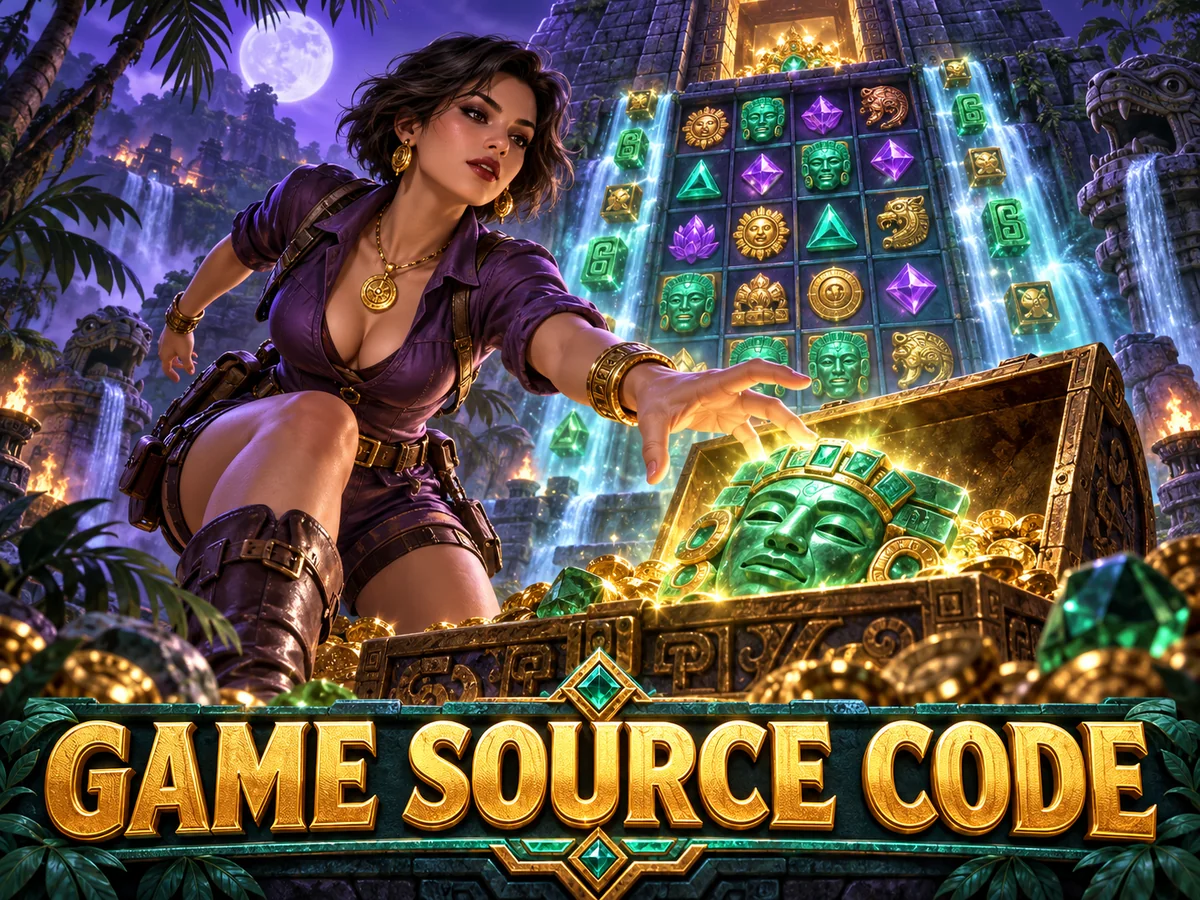
Ruins, carved idols and treasure are familiar ingredients in a slot game. What makes Treasures of Aztec interesting to study is what happens after the symbols stop. A win leaves space on the board, fresh symbols arrive, and another result may carry the suspense forward. A single spin begins to feel like a journey deeper into the ruins rather than an isolated flash of light.
Let the player see the next step
PG Soft's rules describe a cascade sequence: winning symbols disappear, the symbols above them fall, and new winning combinations keep the sequence going. The changing board is connected to the result; it is not simply a long animation attached to the end of a spin.
For an original slot project, that distinction matters. A highlight, a disappearance and a refill should read like connected sentences. A cracking-stone sound can make a result feel substantial, while the incoming symbols can build anticipation. Neither should obscure the board. Even on a small phone screen, the player needs to find the change that just happened without searching through a cloud of effects.
Give the feature a sense of progression
The official guide says four scatters trigger ten free spins, starting at a 2x multiplier that rises through winning cascades within a free spin. The presentation needs a clear thread through the current round, so the player can follow each change into the final calculation.
When designing a custom treasure-themed slot, that thread is more useful than copying a collection of ancient masks. Decide what the player should follow at each moment: remaining spins, the current multiplier or the round's accumulated result. Then arrange the camera, sound and interface around that priority. A clear introduction and a satisfying closing summary help the feature feel like a complete adventure, not just a busier version of the base game.
Build a theme your team can keep developing
A request for PG game source code often begins with a clear product idea: a visually strong cascading game in the lobby, with room to change the theme, add languages and develop it further. The artwork and the complete round flow belong in the same conversation. The client makes the sequence understandable; the server records each result; an editable project keeps future revisions from becoming a fresh start every time.
KuuGe's business focuses on independently developed game source code, custom slot development and game API services. A game's pacing can be a useful reference while your project develops its own world, characters and feature presentation. The value of source code is not confined to the first launch. It also lies in the space it gives your team to build the next version.
Reference: PG Soft — Treasures of Aztec
Continue exploring
- Starlight Princess 1000: Knowing When the Character Beside the Reels Should Be Quiet
- Lucky Neko: When a Familiar Mascot Becomes Part of the Game's Language
- Jackpot Fishing: Making Every Action Read Clearly in a Busy Ocean Arcade
Explore KuuGe source projects for secondary development · Browse all projects and guides