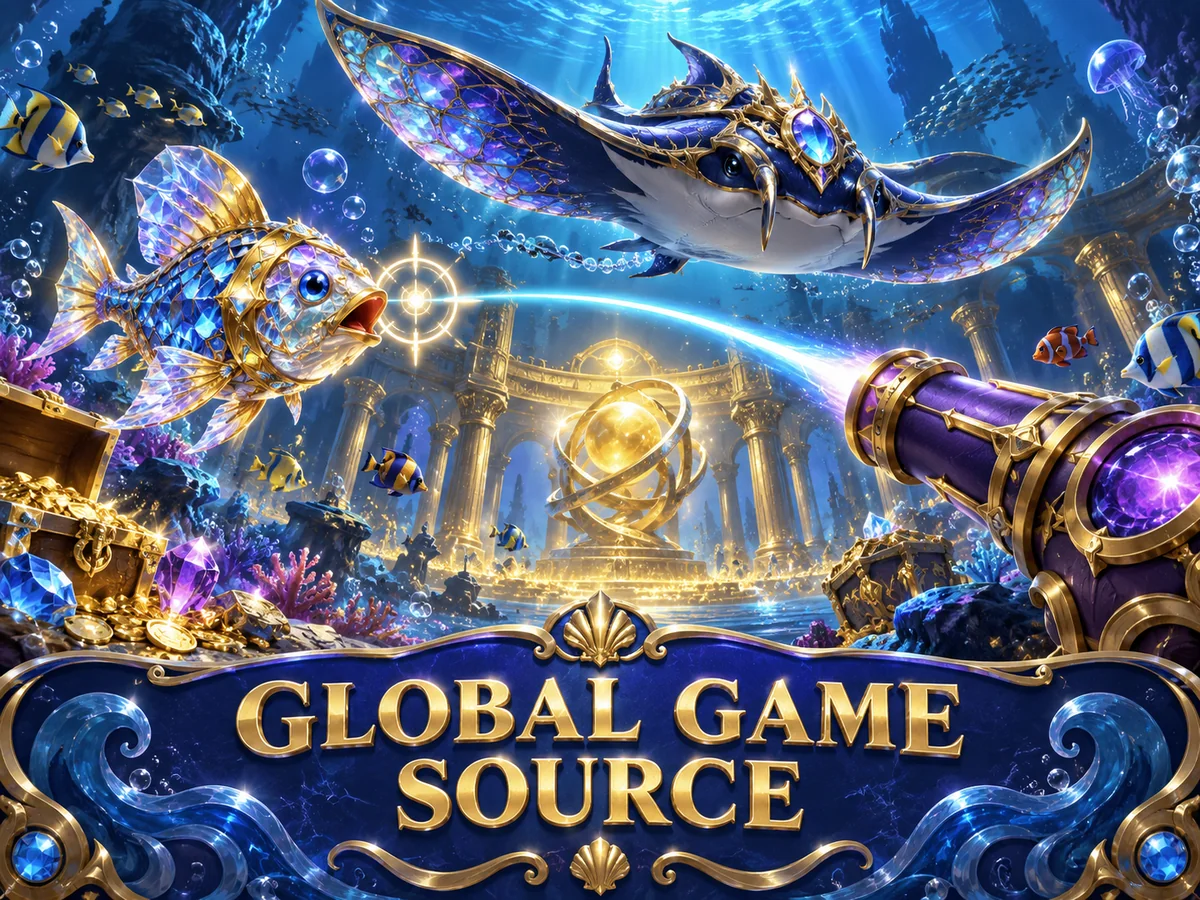
A large fish enters from the edge of the screen. Light moves across its body, a cannon turns, and bright trails cross the seabed. A fishing arcade builds its energy differently from a slot with a relatively fixed symbol board. Its world is always passing by, offering moving targets the player wants to respond to.
That movement also creates a design problem. If every fish is surrounded by effects and every response has the same volume, it becomes difficult to understand where an action went. Jackpot Fishing provides a useful starting point for studying the connection between an input, a target and a result.
Give the ocean a changing focus
TaDa Gaming's official information identifies Jackpot Fishing as a fish game and highlights jackpot targets, high-speed fishing and bubble extra-score features. The setting revolves around moving creatures and target events rather than a repeated arrangement of reel symbols.
In an original fishing project, a large target deserves attention, but it does not have to fill the screen continuously. Ordinary fish can establish a flowing background rhythm. A special target can then receive a more deliberate entrance, silhouette and sound. Its arrival changes the scene's focus instead of competing with an effect level that has been at maximum since the beginning.
A busy ocean does not need to be empty to be readable. It needs a clear answer to the question of which creature matters at this moment.
Connect the cannon to the response
There is often a stretch of water between an input control and a moving target. Direction changes, an attack begins, and feedback appears near the creature. Without a visible relationship between those steps, the player can feel as though the control and the action belong to different screens.
For an independently developed game, cannon direction, the origin of a trail and the local target response can form one continuous visual sentence. Trails need not be heavy, and impacts need not cover the ocean. Timing and direction matter more. With several targets present, a restrained outline or local change in brightness can keep feedback attached to the relevant object.
A hit animation and a confirmed capture also have different roles. Visual contact explains the action, while the reward display should follow the actual game result. An effect must not stand in for settlement.
The fish can leave; the record should not disappear
Consider a development scenario in which the network drops just after a special target passes through. On return, a different group of fish occupies the scene. A client that remembers only an old swimming position, without knowing whether an associated action completed, can produce late effects, repeated prompts or confusing results.
A larger reward panel does not fix that boundary. An original project needs to separate temporary ocean presentation from operation records and confirmed results. A creature's animation can end without erasing a completed reward. Recovery should rebuild the current scene and explain any relevant result, rather than replaying an obsolete spectacle.
The same principle matters when a game connects through a platform API. The client provides the immediate experience; the game service and platform keep the records coherent. Receiving the same result again should not turn it into a second reward. These quiet details help a game remain connected to the lobby around it.
Build an ocean your team can keep developing
A request for overseas fishing game source code or a TaDa game API may come from an existing lobby or a team starting with one distinctive arcade theme. Either way, the product benefits from a clear point of view: the kind of ocean it presents, the feel of an action and the themes that might follow.
KuuGe offers independently developed source code, custom games and game API services, with room for secondary development. A fantasy deep sea, a mechanical ocean or a treasure route can each support its own characters and cannon designs. An editable project lets those changes extend beyond the advertisement and into the resources, states and interfaces of the next version.
A memorable fishing arcade is not simply the brightest underwater scene. It makes the relationship between the player's action and the game's response visible inside the movement.
Reference: TaDa Gaming — Jackpot Fishing official game information
Continue exploring
- Starlight Princess 1000: Knowing When the Character Beside the Reels Should Be Quiet
- Lucky Neko: When a Familiar Mascot Becomes Part of the Game's Language
- Sweet Bonanza 2500: Giving a Colorful Candy Slot a Clear Visual Hierarchy
Explore KuuGe source projects for secondary development · Browse all projects and guides