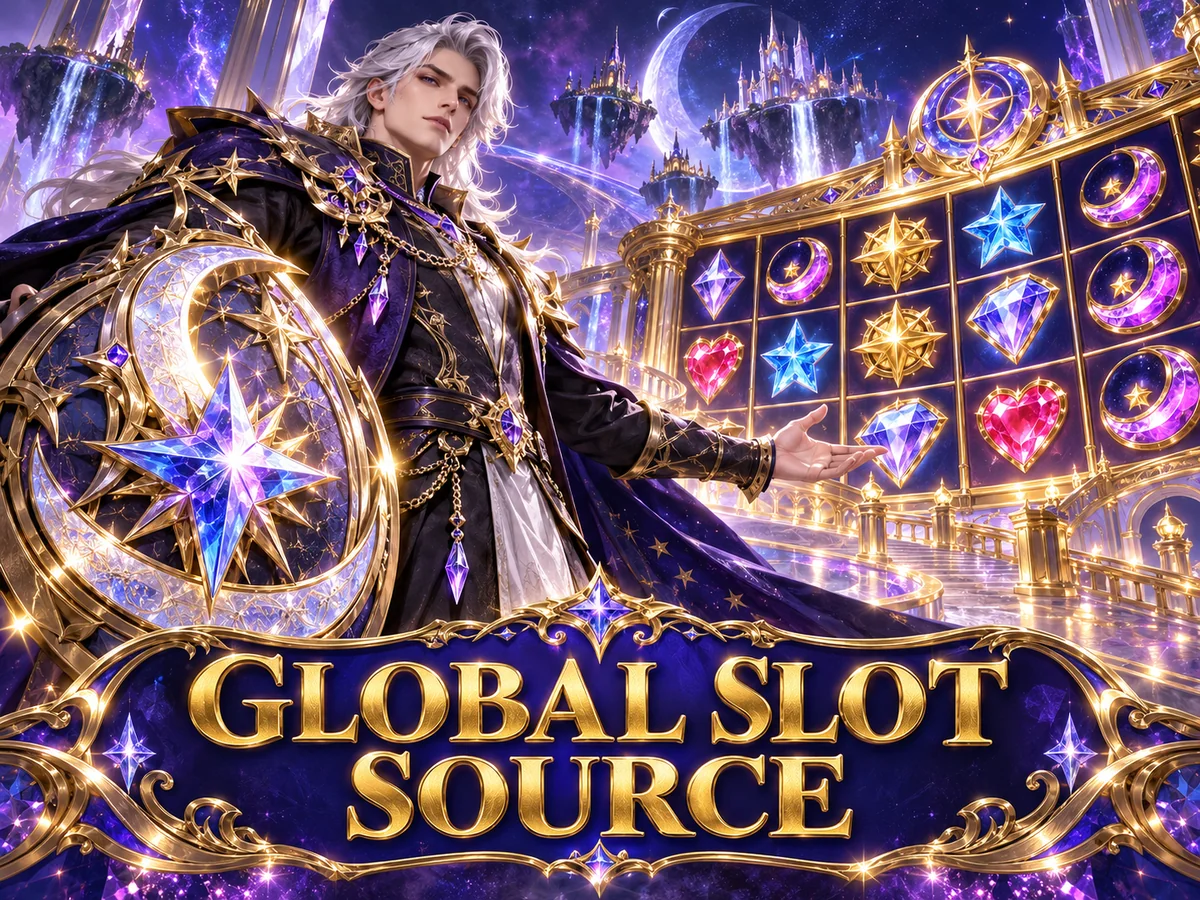
A celestial slot is often remembered through the person standing beside its gems. A cape lifts, a wand rises, and the board becomes part of a performance. Starlight Princess 1000 places its princess next to the reels, giving a symbol-filled frame an identifiable companion.
For a team developing an original sky-themed slot, however, adding an attractive character is only the beginning. The more useful questions concern timing. When should the character act, where should that action direct attention, and when should the board have the stage to itself?
Being present does not require constant movement
Pragmatic Play's official page describes a gem-filled game with tumbles and a princess beside the reels. She also appears as the Scatter, with four or more Scatters triggering free spins. The character consequently connects the setting with a recognizable feature entrance.
An original project can begin with a quieter idea of presence. Breathing and a small glance toward the board may be enough during idle moments. As an event unfolds, the character can follow it with her eyes. A more substantial gesture can then be reserved for a moment that warrants emphasis.
If every stage receives the same energetic performance, none has much weight. Quietness creates contrast. It can make the next deliberate action easier to notice without requiring a larger effect or a longer animation.
A gesture should send the eye somewhere useful
Imagine a custom celestial game in which special symbols have just appeared. The character gestures to the right, but the relevant cue lights up in the lower left. Her cape crosses the board precisely when a symbol is changing. The individual assets may be beautiful while the combined sequence gives conflicting instructions.
The answer is not necessarily another animation. Eye direction, hand movement and a light trail can point toward the same part of the experience. Important values can remain in a stable location. The character becomes a guide to the board rather than an obstacle in front of it.
Portrait layout adds another decision. A long cape that works naturally beside a landscape board may need a smaller silhouette on a phone. A cue positioned beside the character may require its own layout. Scaling the entire picture down preserves dimensions, but not necessarily the relationship that made the original sequence understandable.
Design the end of the performance too
A spectacular gesture needs a way back into play. A hand still raised while the next symbols arrive, or a celebration sound continuing into a new event, can make a polished scene feel loosely connected.
For an independently developed project, decide how each performance ends. Establish when the character returns to idle, which small movements can yield to a new event, and how clearly an important result must be shown. The client can select a presentation from explicit game states instead of relying on an assumed animation duration to decide what has happened.
That boundary also matters after a reconnect. Rebuilding the correct current screen is more important than replaying an old character sequence from its opening pose. The performance may be brief; the result and available controls should be unambiguous. These are production suggestions for an original game, not claims about the official title's internal code.
Discover the character your own game needs
A search for Pragmatic Play game source code or Starlight Princess source code may begin with affection for the sky setting, the companion beside the reels, or both. Separating those attractions opens more possibilities for customization. An astral navigator, a moonlit guardian or a traveler between cloud islands can each establish a different personality, with its own symbols, sounds and gestures.
KuuGe offers independently developed game source code, custom slot development and game API services, with editable projects for secondary development. The point is not merely to replace one princess with another person. It is to let a new character participate coherently in the experience, leaving room for later costumes, language editions, portrait layouts and related themes. The particular presentation and interface scope should be shaped around the project.
A strong character does not occupy the brightest part of the screen all the time. It knows when to create a moment and when to step back so the game can speak.
Reference: Pragmatic Play — Starlight Princess 1000 official game page
Continue exploring
- Lucky Neko: When a Familiar Mascot Becomes Part of the Game's Language
- Jackpot Fishing: Making Every Action Read Clearly in a Busy Ocean Arcade
- Sweet Bonanza 2500: Giving a Colorful Candy Slot a Clear Visual Hierarchy
Explore KuuGe source projects for secondary development · Browse all projects and guides