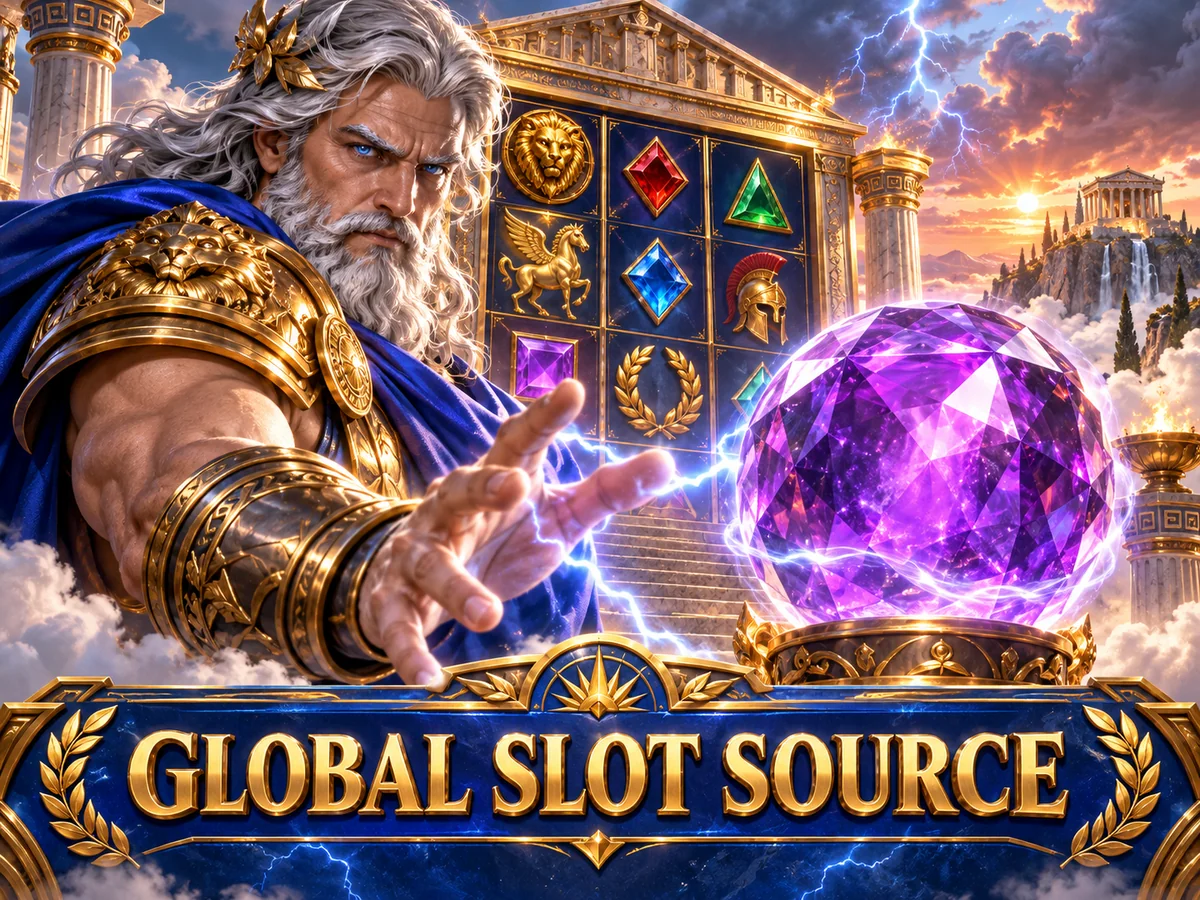
Ask someone what they remember about Gates of Olympus and Zeus or lightning will often come first. Yet filling every moment with bright effects can make a game harder to read. Gates of Olympus 2500 offers a useful development question: how do you move attention from the gemstone board to a multiplier, then back to the final result? The character supplies the scale and drama; the round still needs to explain itself.
Give the reveal somewhere to land
Pragmatic Play describes a 6x5 board with tumbling wins. Multiplier values on a spin are added and applied to its total win; 2,500x is a possible random value, not a per-round promise.
The presentation challenge is order, not volume. First make the winning symbols easy to see. Then give an arriving multiplier enough visual space to be recognized. Finally, connect it to the round's result. If lightning, character motion and animated numbers all demand attention together, the player may notice the spectacle without understanding the calculation.
Different accumulation rules need different explanations
A pre-feature wheel selects the free-spin mode. One mode accumulates multipliers from winning spins; another accumulates every arriving multiplier for subsequent wins. The corresponding super modes raise the minimum multiplier.
For an original game team, a new background is not enough to communicate that difference. The interface needs to show the current mode, explain why a value remains on screen and make its role in the next round understandable. A stable accumulation area can do more than numbers flying in every direction. A distinct, readable introduction also means the player does not have to guess the feature's rules after entering it.
Turn the sense of scale into your own visual language
A search for PP game source code or global slot source code often represents a more complete brief than a working spin button. The customer wants a strong character, layered result presentation and a screen that stays comfortable on a phone. Making those goals specific turns custom slot development into a conversation about achievable art and interaction, rather than a vague request for resemblance.
KuuGe provides independently developed game source code, secondary development and customization, alongside game API services. For a project building its own identity, the interesting work is coordinating the character, game state and presentation rhythm. Start with the scale of a mythology theme, develop your own characters and symbols, and give every multiplier change a clear explanation. Visual impact can earn the first click; a readable round gives that impact a purpose.
Reference: Pragmatic Play — Gates of Olympus 2500
Continue exploring
- Starlight Princess 1000: Knowing When the Character Beside the Reels Should Be Quiet
- Lucky Neko: When a Familiar Mascot Becomes Part of the Game's Language
- Jackpot Fishing: Making Every Action Read Clearly in a Busy Ocean Arcade
Explore KuuGe source projects for secondary development · Browse all projects and guides